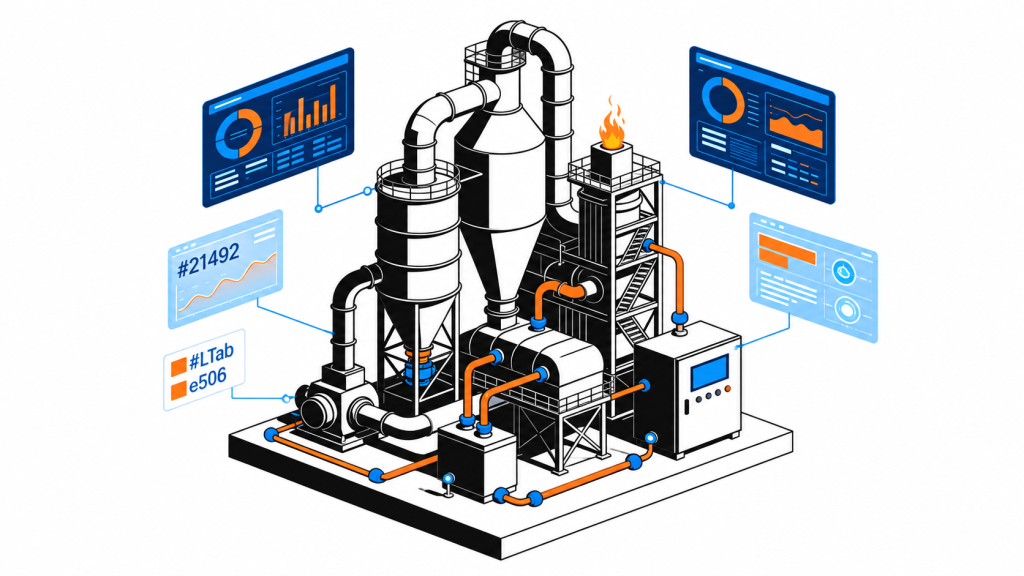
AI Digital Twins for Predictive Cement Operations
Bluetab implemented AI-powered digital twins for clinker production, using generative time-series models to deliver 90–95% prediction accuracy and earlier visibility into quality and equipment behavior.
Predictive Intelligence for More Resilient Cement Operations
Bluetab implemented digital twins powered by generative time-series models for a leading cement producer in Latin America. The solution predicts multiple industrial variables simultaneously, achieving 90–95% prediction accuracy and giving operators earlier visibility into clinker quality and equipment behavior.
The challenge: get ahead of a highly complicated operation
At the Cartagena plant, clinker production operated at 80–90 tonnes per hour in an energy-intensive process. Although the plant had advanced sensor infrastructure, historical data contained inconsistencies and gaps, and operators lacked the foresight needed to anticipate failures across critical systems such as the reclaimer, raw mill, and kiln.
- Sustainability targets included a 5% reduction in specific energy consumption and a 16% reduction in CO₂ emissions.
- Data-quality inconsistencies and gaps in historical information.
- No ability to anticipate failures across critical industrial systems.
- Operational lag between control changes and their impact on the process.
- Need for change management so teams understood AI as a decision-support tool.
The solution: digital twins with generative models
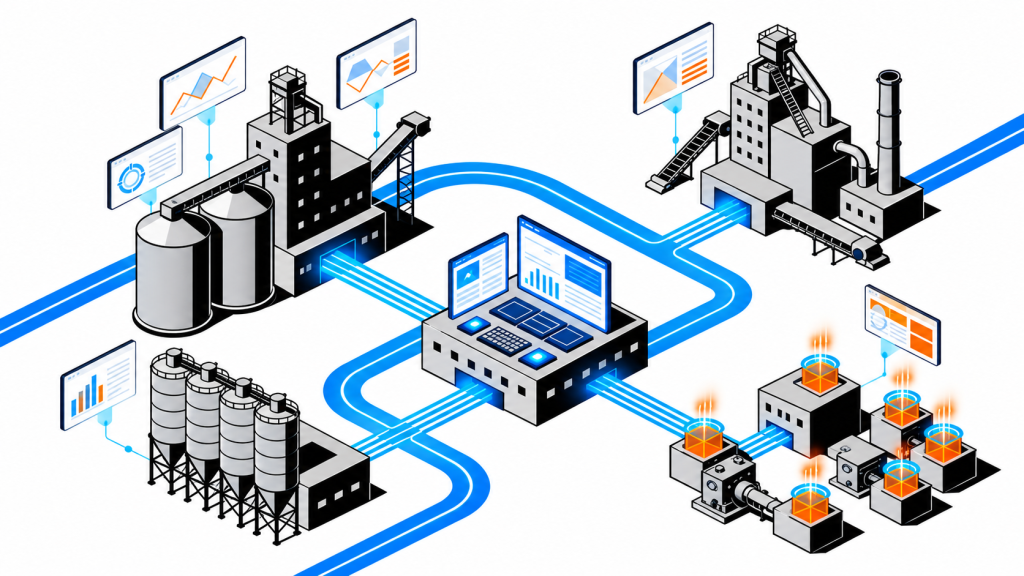
Bluetab implemented digital twins powered by generative time-series models. The replicable generative model predicts multiple variables simultaneously across industrial systems with reliable data, giving operators earlier visibility into quality and equipment behavior. Streaming predictions are integrated into control-room displays.
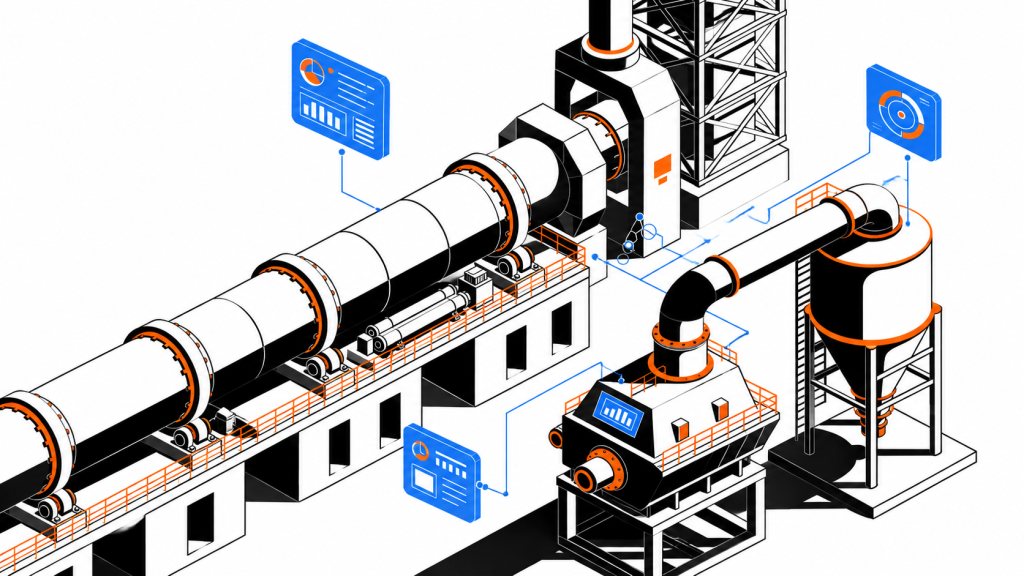
Reclaimer model
95% accuracy, 15-minute prediction horizon using 30 minutes of context; anticipates motor failures.
Raw mill model
95% accuracy, 30-minute prediction horizon using 2 hours of context; optimizes kiln feed.
Kiln model
90% accuracy, 1-hour prediction horizon using 6 hours of context; predicts 51 variables simultaneously.
Quality model
Prediction frequency every 5 minutes versus every 30 minutes; provides real-time visibility.
Business Outcomes
- Achieved 90–95% prediction accuracy.
- Enabled continuous quality visibility with updates every 5 minutes.
- Improved the ability to prevent failures and unplanned downtime.
- Optimized thermal energy consumption and cooling.
- Reduced CO₂ emissions.
- Improved energy efficiency across coal and natural gas consumption.
- Helps prevent multimillion-dollar losses associated with quality issues.
- Supports faster, better-informed operational decisions.
- Planned expansion to additional plants in Honduras and Colombia.
FAQ's
What are AI-powered digital twins in cement operations?
In this use case, digital twins use generative time-series models to predict industrial variables and provide operators with earlier visibility into clinker quality and equipment behavior.
What prediction accuracy did the models achieve?
The documented models achieved between 90% and more than 95% accuracy, depending on the industrial system.
How far ahead can the system predict operational behavior?
The documented prediction horizons range from 15 minutes for the reclaimer to 30 minutes for the raw mill and 1 hour for the kiln.
Were the 5% energy and 16% CO₂ figures achieved results?
No. The PDF identifies them as sustainability targets. The documented business outcomes state that the solution optimized energy consumption, reduced CO₂ emissions, and improved energy efficiency without assigning those target percentages as achieved results.